Vertical Farming Market Poised for Accelerated Growth Amid Rising Demand for Sustainable Food Production
The global vertical farming market is entering a phase of rapid transformation, driven by increasing urbanization, climate volatility, and the urgent need for efficient, sustainable agricultural practices. Industry analysts project significant expansion over the coming years as technological advancements and shifting consumer preferences reshape the future of food production.
Vertical farming, which involves cultivating crops in
stacked layers within controlled indoor environments, is gaining traction as a viable
solution to traditional agriculture’s limitations. By leveraging innovations
such as hydroponics, aeroponics, and artificial intelligence-based monitoring
systems, vertical farms can produce high yields with minimal land and water
usage.
Market Drivers and Emerging Trends
A key factor fueling market growth is the rising global
population, which continues to place pressure on conventional farming systems.
Urban centers, in particular, are turning to vertical farming to ensure a
steady supply of fresh produce without relying heavily on long-distance
transportation. This approach not only reduces carbon emissions but also
enhances food security.
Looking
for more specific insights? Customize this report to suite your business needs
Technological integration remains at the forefront of
industry expansion. Automation, data analytics, and climate control systems are
enabling farmers to optimize crop cycles, reduce waste, and maintain consistent
quality. Additionally, energy-efficient LED lighting solutions are becoming
more advanced, lowering operational costs and improving scalability.
Consumers are also playing a pivotal role in shaping the
market. Increasing awareness of pesticide-free, locally grown produce is
driving demand for vertically farmed crops. Retailers and food service
providers are responding by partnering with vertical farming companies to meet
evolving expectations for freshness and sustainability.
Regional Insights
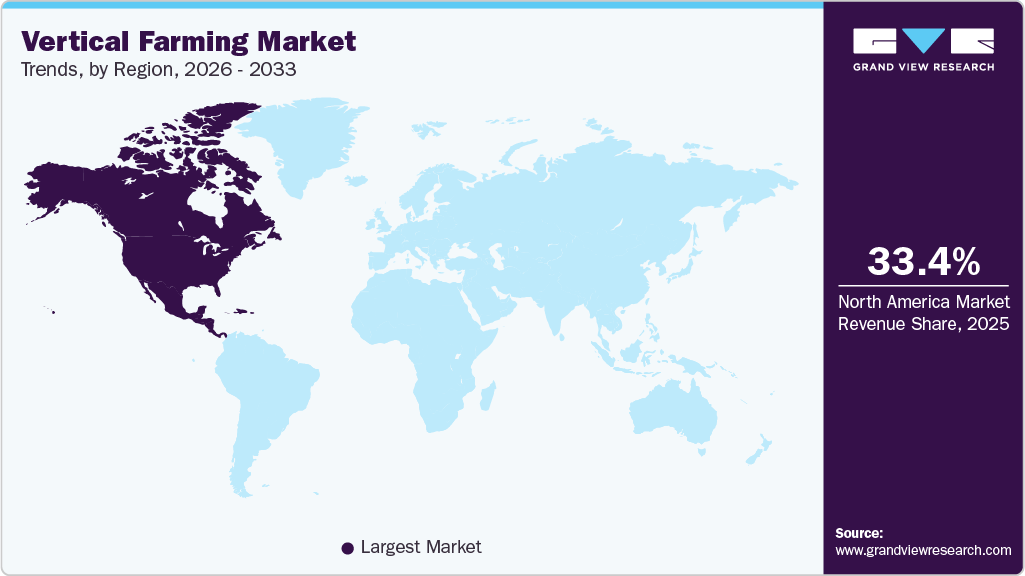
While North America and Europe continue to lead in terms
of technological adoption and infrastructure, emerging markets in Asia-Pacific
and the Middle East are witnessing accelerated growth. Governments in these
regions are investing in controlled-environment agriculture to address food
security challenges and reduce dependence on imports.
India, in particular, is showing promising potential,
with startups and agritech firms exploring vertical farming as a solution to
land scarcity and unpredictable weather patterns. Supportive policies and
increasing investment activity are expected to further boost market
penetration.
Challenges and Opportunities
Despite its advantages, the vertical farming industry
faces challenges such as high initial capital investment and energy consumption
concerns. However, ongoing research and development efforts are focused on
improving energy efficiency and reducing setup costs, making the model more
accessible to a broader range of stakeholders.
The integration of renewable energy sources and circular
economy practices presents significant opportunities for long-term
sustainability. As innovation continues to evolve, vertical farming is expected
to become an integral component of global food systems.
Competitive Landscape
The market is characterized by a growing number of
startups, established agricultural firms, and technology providers entering the
space. Strategic collaborations, mergers, and investments are becoming
increasingly common as companies seek to strengthen their market position and
expand their geographic reach.
Outlook
The vertical farming market is set to redefine agricultural paradigms by
offering a scalable, resource-efficient alternative to traditional farming. As
environmental concerns intensify and demand for fresh produce rises, the
industry is well-positioned to play a critical role in the future of food
production.
Looking for a report customized to your requirements? Explore our Custom Research Offering
Grand View Research offers
√ Focused
market intelligence reports on specific geographies or high-growth segments.
√ Extended
forecast timelines for long-term planning.
√ Competitor
Benchmarking and Supply Chain Analysis
√ Inclusion
of regulatory and policy assessments.
√ Inclusion
of custom data models, KPIs, or applications unique to your business
√ Specific
high-impact Data Decks and Tables to support effective decision making
And much more…

Comments
Post a Comment