Global Synthetic Biology Market Poised for Robust Growth as Innovation, Sustainability, and Expanding Applications Drive Industry Evolution
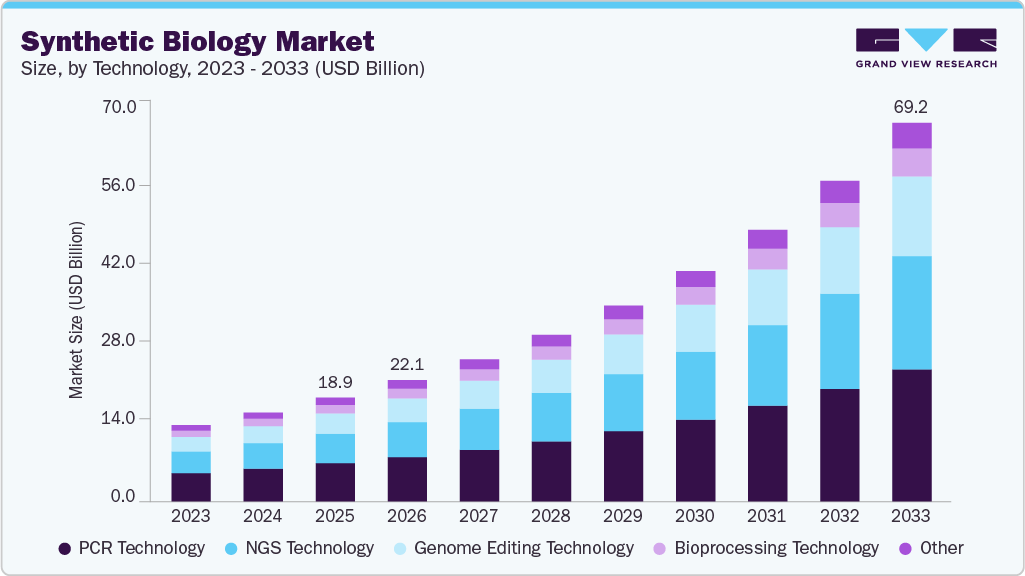
April 2026 — The global synthetic biology market is entering a phase of dynamic expansion, fueled by rapid technological advancements, increasing investment in biotechnology, and a growing demand for sustainable solutions across industries. As the field continues to mature, synthetic biology is reshaping how products are designed and manufactured, offering new possibilities in healthcare, agriculture, energy, and industrial production.
Once considered a
niche segment of biotechnology, synthetic biology is now gaining mainstream
attention as organizations and governments recognize its potential to address
complex global challenges. From engineered microbes to lab-grown materials, the
market is witnessing a surge in innovation that is expected to sustain
long-term growth.
Advanced Applications Drive Market Momentum
A defining trend
in the synthetic biology market is the expansion of high-value applications.
Companies are increasingly focusing on precision-driven solutions such as gene
editing, engineered cell therapies, and bio-based chemical production.
In healthcare,
synthetic biology is enabling the development of targeted therapies,
personalized medicine, and faster vaccine production. Meanwhile, industries
such as agriculture and food are leveraging engineered organisms to improve
crop resilience, enhance nutritional value, and create alternative proteins.
As demand for
efficient and scalable biological solutions rises, companies are prioritizing
research and development to unlock new commercial opportunities.
Need specific data? Request a tailored
version of this report
Sustainability at the Core of Industry Growth
Sustainability
has emerged as a central pillar of the synthetic biology market. Organizations
are adopting bio-based production methods to reduce reliance on fossil fuels
and minimize environmental impact.
Key initiatives
include:
- Development
of biodegradable materials
- Bio-manufacturing
using renewable feedstocks
- Reduction of
industrial waste and emissions
These
environmentally conscious approaches are aligning with global sustainability
goals, positioning synthetic biology as a critical enabler of the green
economy. As regulatory frameworks and consumer awareness evolve, sustainable
bio-solutions are expected to gain significant market share.
Emerging Markets and Cross-Industry Adoption
While North
America and Europe continue to lead in innovation, emerging markets in
Asia-Pacific and other regions are rapidly adopting synthetic biology
technologies. Increased funding, supportive government policies, and a growing
talent pool are contributing to market expansion in these areas.
Additionally,
cross-industry adoption is accelerating. Synthetic biology is no longer
confined to laboratories—it is being integrated into sectors such as:
- Pharmaceuticals
- Agriculture
- Food and
beverages
- Cosmetics
- Energy and
materials
This
diversification is broadening the market’s reach and creating new revenue
streams for industry players.
Explore Global Market Statistics with Grand
View Horizon Databooks | View Interactive Market Dashboard for Synthetic
Biology Market Report
Digital Tools and Automation Transform
Research
The integration
of digital technologies is revolutionizing synthetic biology workflows.
Artificial intelligence, machine learning, and automation are enabling faster
design, testing, and optimization of biological systems.
Cloud-based
platforms and data-driven tools are improving collaboration and reducing
development timelines. As a result, companies can bring innovations to market
more efficiently, enhancing competitiveness in a rapidly evolving landscape.
Growing Interest in Bio-Based and Alternative
Products
Consumer
preferences are shifting toward sustainable and ethically produced goods,
driving demand for bio-based alternatives. Lab-grown materials, cultured
ingredients, and fermentation-derived products are gaining traction across
industries.
This trend is
particularly evident in areas such as alternative proteins, eco-friendly
textiles, and bio-based chemicals. Companies are responding by expanding their
product portfolios and investing in scalable production technologies.
Competitive Landscape and Strategic
Investments
The synthetic
biology market is becoming increasingly competitive, with established
biotechnology firms, startups, and multinational corporations all vying for
market share. Strategic partnerships, mergers, and acquisitions are playing a
key role in accelerating innovation and expanding global presence.
Investment in
infrastructure, talent, and advanced research capabilities is also
intensifying, as companies aim to maintain a competitive edge and capitalize on
emerging opportunities.
Industry Outlook
Looking ahead,
the global synthetic biology market is expected to experience sustained growth,
driven by continuous innovation, increasing commercialization, and a strong
emphasis on sustainability. As the industry evolves, success will depend on the
ability to scale technologies, navigate regulatory landscapes, and deliver
high-quality, cost-effective solutions.
With its
potential to transform multiple sectors and address pressing global challenges,
synthetic biology is set to become a cornerstone of the future bioeconomy.
Get data tailored to
your market — Explore custom research services by Grand
View Research Request Industry-Specific Customization
with custom research services by Grand View Research


Comments
Post a Comment